
UEFA Champions League Matchday 1 Tactical Breakdown: League Phase Dynamics, Squad Rotation, and High-Value Match Predictions

The European football calendar reaches its first major inflection point this week with the return of the UEFA Champions League. Under the expanded 36-team single-table format, every goal, point, and underlying metric carries amplified importance from the opening kickoff.
With European heavyweights navigating fixture congestion and domestic form swings, finding genuine market edges requires looking past club reputations and evaluating underlying performance indicators: Expected Goals (xG), pressing efficiency (PPDA), and rotation-induced defensive vulnerabilities.

European nights return under the 36-team single-table format.. Source: UEFA.com
1. The Tactical Reality of the 36-Team League Phase
The traditional four-team group stage is gone. In this single-table format, qualifying directly for the Round of 16 (Top 8 finish) eliminates two grueling playoff fixtures in February.
Because goal difference across all eight matches serves as the primary tiebreaker among 36 teams, elite sides can no longer afford to "shut down" when holding a 1–0 lead in the 70th minute.
Key Structural Drivers Affecting Match Outcomes:
- Aggressive Goal Hunting: Frontrunners have a direct incentive to run up scorelines against mid-tier opposition to secure favorable goal differentials.
- Defensive Concession Risk in Late Game States: Trailing sides must overcommit men forward rather than settle for low-margin defeats, opening expansive counter-attacking lanes late in the second half.
- The "Rotation Tax": Clubs competing across domestic cups, weekend derbies, and midweek European fixtures are forced to rotate fullbacks and central midfielders, creating disjointed defensive transition structures.
If you are tracking how team sheets and late lineup shifts affect kickoff probabilities, consult our real-time Champions League predictions for model-backed statistical projections.
2. Matchday 1 Tactical Spotlights & Value Clashes
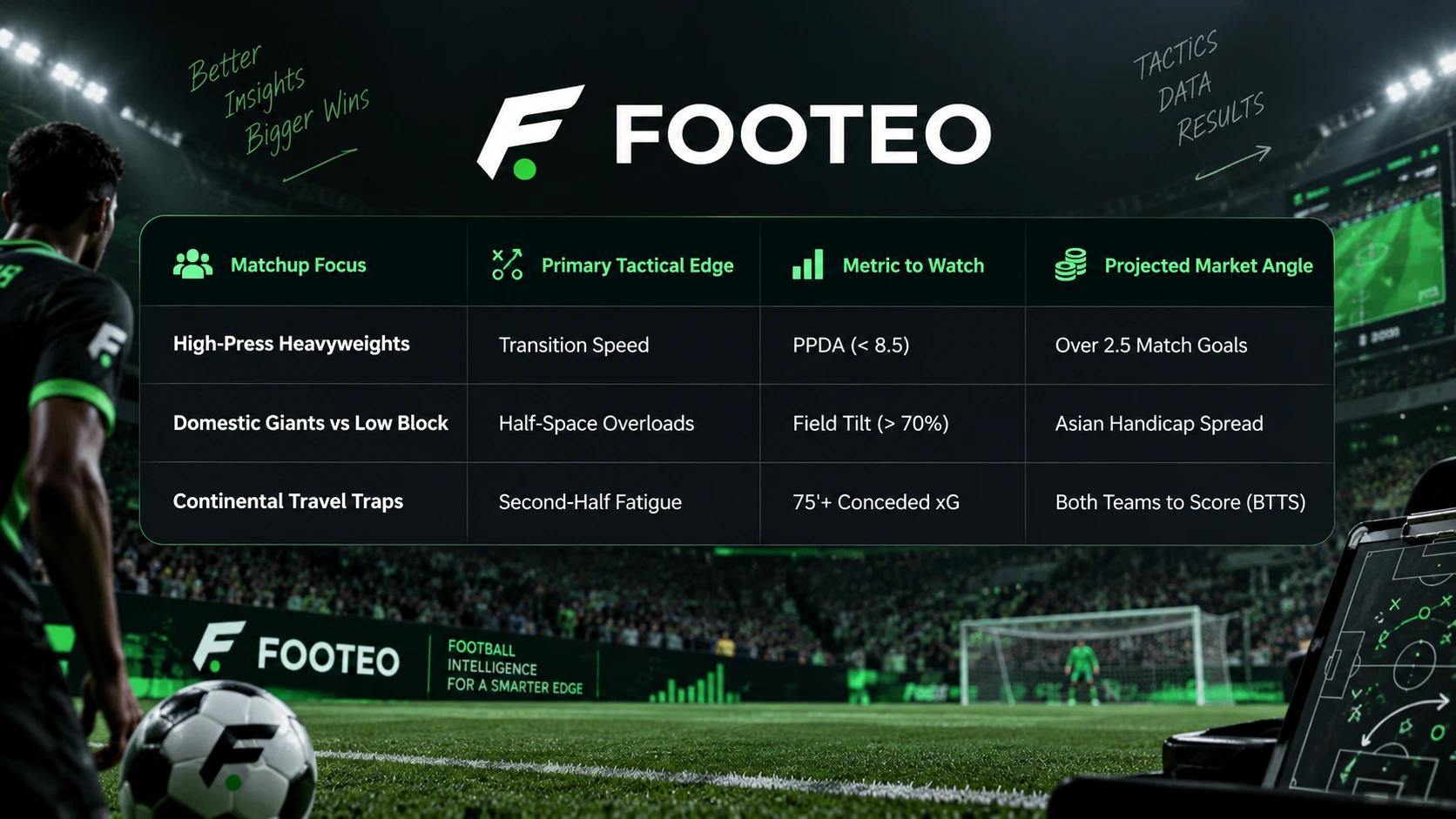
Clash A: High-Pressing Intensity vs. Low-Block Specialists
When elite pressing outfits encounter structured domestic champions from secondary leagues, markets frequently overprice clean sheets. While top-tier clubs dominate possession (regularly exceeding 65% field tilt), their high defensive lines remain susceptible to direct vertical counters, especially when central midfield defensive shields are rotated.
- Tactical Indicator: High turnovers forced within 40 meters of the opposition goal.
- Analytical Takeaway: Instead of taking short money on outright match winners, assess lines on Over 2.5 Total Goals or Home Team to Score in Both Halves.
Clash B: The Continental Travel Trap
Midweek travel across Eastern and Southern Europe reliably depresses physical output. Teams playing away after a demanding domestic derby consistently show an uptick in passes allowed per defensive action (PPDA) in the final 20 minutes.
- Tactical Indicator: Opponent sprint volume vs. recovery run speed after the 65th minute.
- Analytical Takeaway: Look for live value on second-half goal markets and away favorites conceding late chances. For daily breakdowns covering both primary and secondary European leagues, review all today’s picks to contrast early line movement against model ratings.
3. Statistical Models: Decoupling Variance from Sustainable Form
Basing match evaluations exclusively on domestic league tables is one of the most common pitfalls in early-season European analysis. A club sitting atop their domestic table may be running unsustainably hot on finishing conversion, while an underperforming side may be generating dominant underlying metrics.
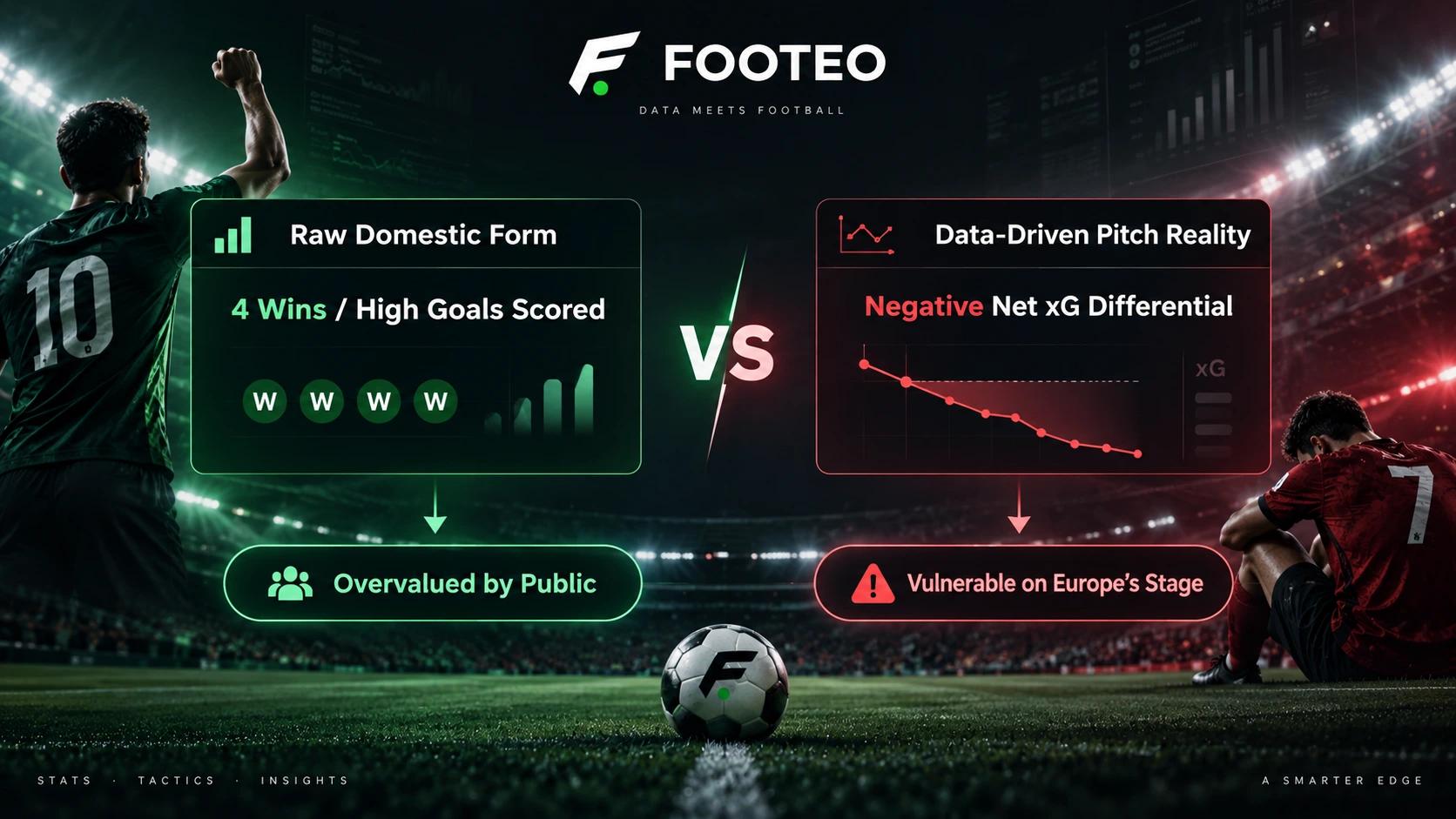
At FooteoPlay, our quantitative framework decomposes performance into four fundamental pillars:
- Form & Momentum: Weighted heavily toward the trailing three matches with specific emphasis on non-penalty expected goals (npxG).
- Head-to-Head & Tactical Stylistic Fits: How a manager's build-up shape (e.g., 3-2-5 in possession) fares against structured mid-blocks.
- Team News & Lineup Depth: The quantified drop-off in transition defense when reserve fullbacks replace first-choice starters.
- Market Discrepancies: Isolating instances where public sentiment inflates a favorite’s price past its true probabilistic threshold.
Serious sports analysts and syndicate bettors seeking higher-odds accumulators and deeper statistical breakdowns can unlock full match access through the Footeo VIP Plan.
4. Practical Match Prediction Checklist for Matchday 1
Before locking in your matchday assessments, run every fixture through this pre-kickoff filter:
- Check the 72-Hour Turnaround: Did the team play an intense away domestic fixture on Saturday afternoon? Teams with fewer than 72 hours of recovery show an average 8% decline in pressing actions.
- Inspect the Fullback Pairings: Champions League wingers exploit isolated 1v1 situations. If a side is fielding a reserve fullback due to injury, look at opposition winger shot-creation metrics.
- Analyze Match State Sensitivity: In the single-table format, goal differential matters until the final whistle. Beware of backing defensive "under" lines on heavy favorites capable of scoring multiple goals late against tired defenses.
- Follow Line Movement: Monitor late smart-money steam. Sharp market line movements 90 minutes before kickoff frequently reflect confirmed insider team news.
To receive instant match alerts, daily analysis, and machine-learning predictions straight to your device, install the Footeo mobile app for real-time fixture coverage.
Frequently Asked Questions (FAQ)
How does the 36-team Champions League format impact goal-line predictions?
Because the single-league standings rank all 36 teams together and use overall goal difference as a primary tiebreaker, top clubs have a strong incentive to continue attacking even when leading by multiple goals. This dynamic generally favors higher goal totals compared to the previous four-team group stage.
Why is expected goals (xG) more reliable than past results for European match predictions?
Past scorelines are often skewed by low-sample events such as red cards, deflected goals, and refereeing decisions. Non-penalty xG isolates the quality and frequency of scoring chances created, providing a more predictive indicator of future performance across disparate domestic leagues.
Where can I find free data-backed football tips and daily accumulators?
You can access updated model projections, tactical overviews, and free daily picks across all major European leagues directly on the Footeo homepage.